GO WORLD Analysis
Last Friday in Istanbul, Recep Tayyip Erdogan and Qatar's emir signed a mutual defence pact. The two sides promised a "common position" against any outside armed attack on either country. A few thousand kilometres south, a Turkish drillship has spent most of this year working off the Somali coast, guarded by the Turkish navy.
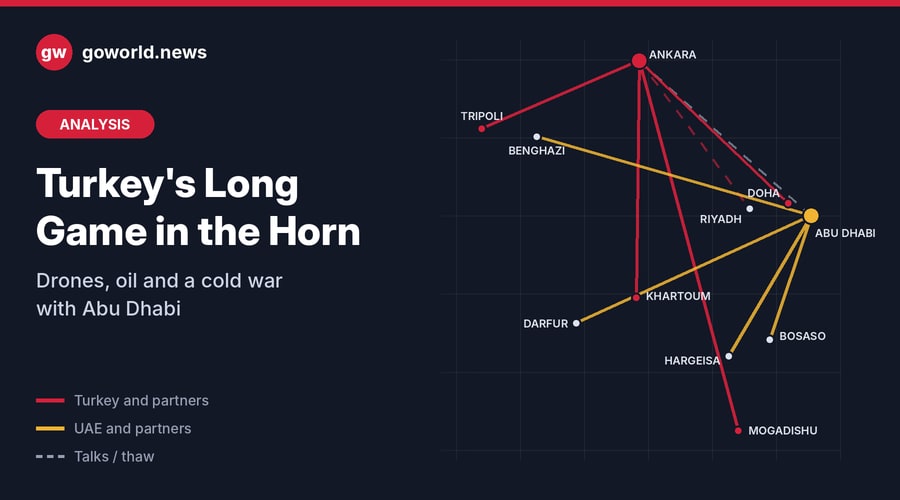
The two events are linked. Over fifteen years Turkey has turned goodwill, drones and construction contracts into military bases and energy rights, from the Gulf to the Horn of Africa. Along the way it has ended up in a quiet but bitter contest with the United Arab Emirates. That contest is now being fought, by proxy, in Sudan, Libya and Somalia.
Somalia: from famine relief to oil rigs
Turkey arrived in Somalia in 2011 with food aid, during the famine, when few foreign leaders would land in Mogadishu. Hospitals, roads and a large embassy followed. The relationship has since changed in kind, not just in size.
In February 2024 the two governments signed a ten-year defence deal. Under it, Ankara committed to build, train and equip the Somali Navy. A month later came an oil and gas agreement. By July 2024, the state oil company TPAO had exclusive rights to explore and produce in three offshore blocks. This year the drillship Çağrı Bey reached Somali waters. In October, Erdogan announced that Turkey would also build a spaceport on Somali soil.
The terms have drawn criticism. A leaked text of the production-sharing deal lets Turkey take up to 90 percent of annual output as "cost petroleum" until its spending is recovered. Turkish officials and some industry analysts say such clauses are normal in frontier deals, where the investor takes all the risk. Critics answer that Somalia, with weak institutions and no bargaining power, signed away its best years of revenue. The real test will be how the profits are split once the costs are paid off. That part of the deal has had far less public scrutiny.
For Villa Somalia, none of this changes the basic picture: Turkey is the partner that showed up and stayed. Few in Mogadishu expect another country to replace it.
The quiet war with Abu Dhabi
Ankara and Abu Dhabi rarely attack each other in public. Their proxies are less restrained.
In Libya, Turkey sent drones, advisers and Syrian fighters to save the government in Tripoli. The Emiratis backed Khalifa Haftar's army in the east. In Sudan, the Sudanese Armed Forces fly Turkish Bayraktar TB2 and Akinci drones. The Rapid Support Forces, according to UN experts and several investigations, rely on Emirati supply lines. The UAE denies arming the RSF.
Analysts now describe two loose camps. One is a UAE-Israel axis that works with Ethiopia, the RSF and Somaliland. The other is a Turkey-Saudi-Egypt-Qatar bloc that backs central governments in Mogadishu and Khartoum. Behind this lies a real difference in method. Some analysts argue that Abu Dhabi finds it cheaper to work with regions and strongmen than to rebuild broken states. Turkey, for its part, prefers to deal with the capital, whatever its weaknesses.
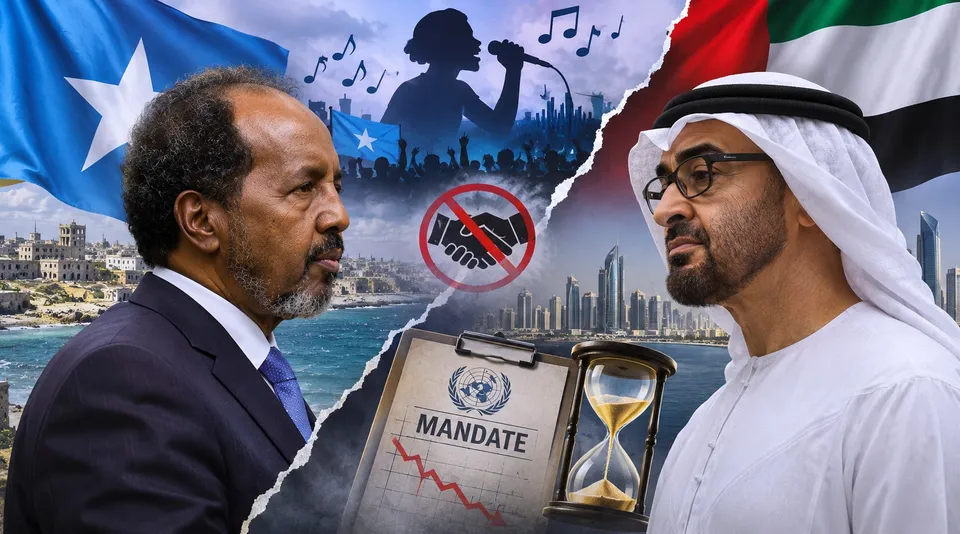
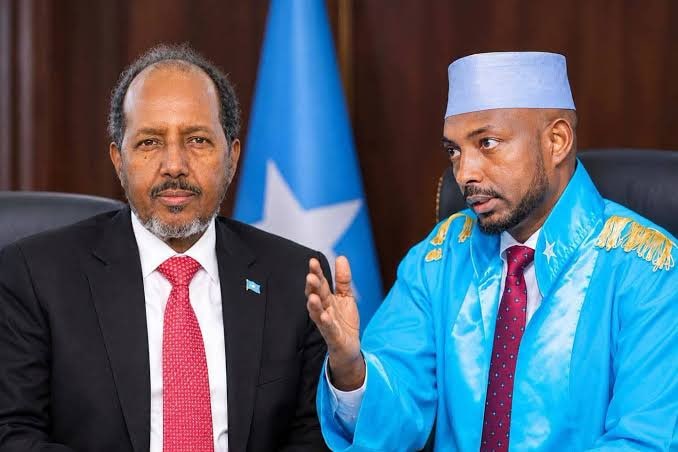
Somalia sits right on this fault line. Several reports have named Emirati facilities in Bosaso as links in the RSF supply chain, which the UAE disputes. On Tuesday, President Hassan Sheikh Mohamud went further than any Somali leader before him. In a televised address, he accused Abu Dhabi of years of interference in Somalia's internal affairs.
Old enemies, new friends in the Gulf
Six years ago, Turkey looked dangerously alone in the region. Its bet on the Muslim Brotherhood had collapsed with Mohamed Morsi's fall in Egypt in 2013. Relations with Riyadh then hit bottom after Saudi agents killed Jamal Khashoggi inside their Istanbul consulate in 2018.
Qatar was the exception. Turkey has had troops there since 2015, and it stood by Doha during the 2017 Gulf blockade. Last week's pact makes that alliance formal. It came after the US-Israeli war on Iran and the disruption of shipping through the Strait of Hormuz. Analysts in Doha say both countries no longer fully trust the American security umbrella.
The bigger shift is with Saudi Arabia. In February Erdogan was in Riyadh, his first visit in over two years, talking about solar power and joint production of military helicopters. The two governments also jointly condemned Israel's recognition of Somaliland. Since the Iran war, Turkey, Saudi Arabia, Egypt and Pakistan have been coordinating closely on regional security.
And yet Turkey cannot afford a clean break with the Emiratis. Emirati money runs through Turkish currency swap lines, capital markets and ports. Non-oil trade between the two reached $44 billion in the first eight months of 2025. So the channels stay open. On November 2, Turkish intelligence chief Ibrahim Kalin was in Abu Dhabi meeting Sheikh Mansour bin Zayed and Sheikh Tahnoon. Ankara fights the UAE in Sudan and banks with it at home.
Sultan, or salesman?
Erdogan's critics have a ready name for all this: neo-Ottomanism. On this reading, Turkey dresses up a bid for regional power, and access to other people's oil, gas and ports, as solidarity with the Muslim world. The Washington Institute describes a leader who believes Turkey can become a great power only by first leading the Middle East. Critics point to the president's palace, his habit of speaking for Muslims everywhere, and the speed with which aid in Somalia turned into drilling rights.
Ankara rejects the label. Turkish officials say they defend the unity and sovereignty of fragile states, while others are happy to see those states break apart. They note that Turkey went into Somalia when Western embassies stayed away. In their view, a state with a navy, roads and an oil industry is a stronger Muslim country, not a colony.
The record since 2020 points to something less romantic than either story. Turkey patched things up with Egypt, Saudi Arabia, Israel for a time, and the UAE when its economy needed Gulf cash. It sells drones to almost anyone who pays. Ideology still shapes the speeches, but contracts and bases increasingly shape the policy.
What it means for Somalia
For Somalis, the Turkish-Emirati rivalry is not an abstract debate. It shapes who trains which troops, who runs which port, and how much leverage Mogadishu has over the federal member states. Each patron brings real money and real guns. Each also brings an agenda that does not always match Somalia's.
The risk is familiar from Libya and Sudan. Outside powers compete through local partners, and the local partners learn to play their patrons off against each other. Somalia's leaders, in Mogadishu and in the regions, will have to decide whether they are using these powers, or being used by them.
The oil may or may not be there in commercial quantities. The bases, the contracts and the rivalry already are.
Share this story