GO WORLD Analysis · Nov 19, 2026
When a defence minister answers a diplomatic dispute with a nationalist song, the target audience is rarely abroad. Somalia's escalating clash with the UAE is real — but so is the political calendar in Villa Somalia, and so are the risks for a federal system already under strain.
A week of escalation
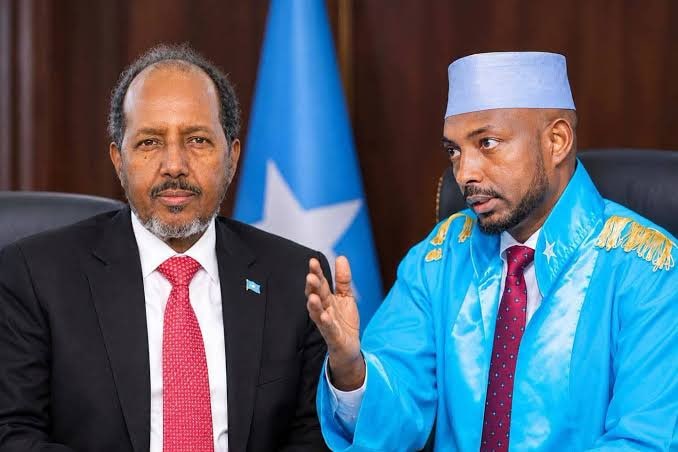
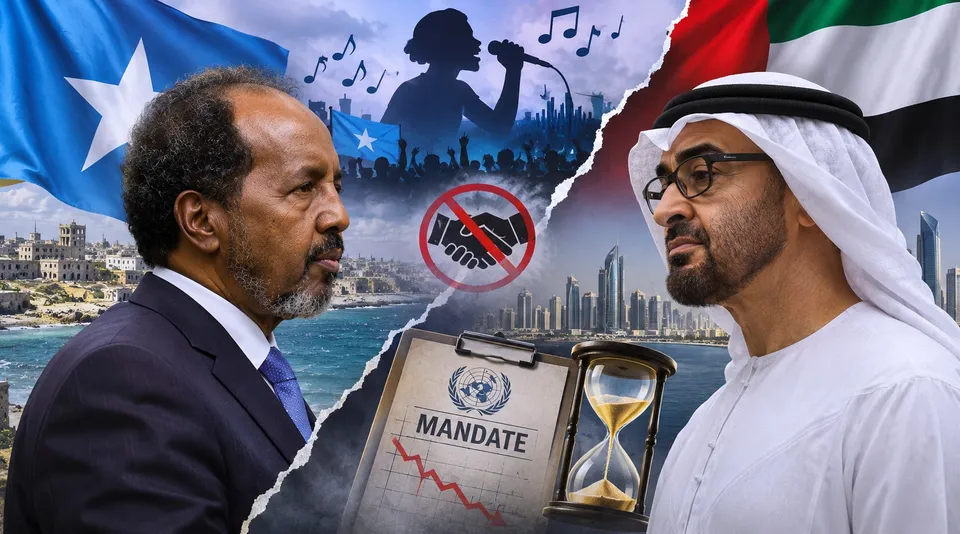
The sequence has been rapid. On Tuesday, 17 November, President Hassan Sheikh Mohamud used a televised national address to deliver the federal government's harshest indictment of the United Arab Emirates to date. He accused Abu Dhabi of signing port agreements for Berbera, Bosaso and Kismayo directly with regional administrations, of establishing military bases outside Somalia's national security system, of playing a role in Israel's recognition of Somaliland, and of seeking to leave Somalia and Sudan as divided as Libya and Yemen.
Within minutes, Defence Minister Ahmed Moallim Fiqi followed on social media, calling for radio stations and journalists he said work for the UAE to be shut down and stripped of their licences — without naming a single outlet. A day later he went further: opposition politicians he described as Emirati "tools" should be brought before the courts, and militias he said were armed by the UAE should be listed as terrorist organisations. The circulation of a combative anti-UAE song from the minister's camp has since turned a diplomatic quarrel into a social-media mobilisation.
Abu Dhabi's reply came through Anwar Gargash, senior diplomatic adviser to the UAE President, who dismissed the president's address as the product of "shifting positions and personal calculations" and blamed Somalia's internal power struggle for dragging the country into regional conflicts. Fiqi answered in kind, accusing the UAE of profiting from the tragedies of other peoples.
The grievances are not invented
It would be a mistake to dismiss Mogadishu's complaints as pure theatre. The rupture has been building all year. On 12 January 2026, the Council of Ministers annulled every agreement with the UAE — security, defence and economic — and closed Somali airspace to Emirati military and cargo flights. That followed Israel's recognition of Somaliland and allegations that the UAE used Somali territory to move Yemeni separatist leader Aidarous al-Zubaidi out of Yemen.
The federal government has a legitimate constitutional point: foreign states should not conclude military and port arrangements with sub-national authorities while bypassing the national government. And Somalia has been here before — in 2018, under President Farmaajo, Mogadishu broke with Abu Dhabi over similar accusations of interference.
But legitimate grievances can still be used for other purposes. The question is not whether the dispute is real. It is why it is being escalated now, in this register, and against whom.
The calendar behind the rhetoric
The timing matters. President Hassan Sheikh's original four-year mandate expired on 15 May 2026. Parliament's March amendments extended federal terms from four to five years, and the government now says its mandate runs to 15 May 2027, with parliamentary polls scheduled for April and a presidential vote in May. The opposition, led by figures such as former President Sheikh Sharif Sheikh Ahmed, rejects the extension outright and argues the president's legal term has already ended. Talks with the opposition and the Puntland leadership collapsed in May without agreement on an electoral model.
In that context, the target list in the minister's posts is revealing. The demand to prosecute "collaborators" is not aimed at Emirati officials. It is aimed at Somali politicians — the same opposition figures, regional presidents and former officials whom Fiqi accused weeks earlier of meeting in Abu Dhabi. The call to close unnamed media outlets lands on the domestic press. The proposal to designate "UAE-armed militias" as terrorists, without defining them, could apply to regional security forces that Mogadishu does not control.
This is the pattern critics describe as diversion: an external enemy that unifies the base, a patriotic frame that makes opponents look disloyal, and a public conversation pulled away from the unresolved questions of mandate, consensus and electoral legitimacy. Nationalism is a powerful currency in Somali politics, and a song travels further than a constitutional argument.
The government's supporters reject this reading. They argue that the confrontation is a principled defence of sovereignty that began long before the electoral dispute, that the January decision was taken by the full cabinet, and that the UAE's own conduct — not Villa Somalia's calendar — drives the escalation. Both things can be partly true: a real sovereignty dispute and a government that sees domestic advantage in keeping it hot.
Where Turkey fits — and what we do not know
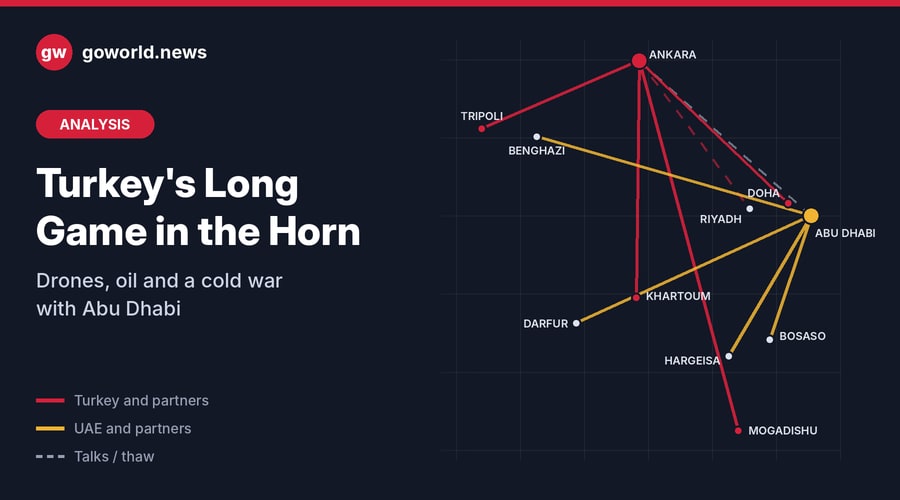
Ankara is the unavoidable backdrop. Turkey runs Camp TURKSOM in Mogadishu, its largest overseas military base, and has trained thousands of Somali troops. It deployed F-16s to Mogadishu in early 2026, signed a ten-year joint naval arrangement, extended its military mission in July, and its state oil company is drilling Somalia's first offshore exploration well, Curad-1, with results expected before the end of this year. Mogadishu has also moved closer to Qatar and joined a Saudi–Egyptian security framework — all rivals or competitors of Abu Dhabi in the wider Red Sea contest.
That alignment has fed speculation that Ankara is encouraging Mogadishu's hard line against the UAE. There is, so far, no public evidence that Turkey directed this week's escalation, and Turkish statements have stressed Somalia's territorial integrity rather than attacks on Abu Dhabi. The more defensible conclusion is structural: Somalia's federal government has tied its security, its energy future and its diplomatic protection to one bloc, and the UAE's partnerships with the member states and Somaliland sit on the other side of that line. Whether the push comes from Ankara or from Villa Somalia's own calculations, the effect is the same — Somalia becomes a theatre for a Gulf–Turkish rivalry it cannot control.
The federal fault line
This is where the real danger lies. Puntland, Jubaland and Somaliland rejected the January cancellation of UAE agreements. These administrations have long sought development investment, port financing and security support from whichever partners are willing to provide it — in part because Mogadishu has not delivered a fair framework for resource-sharing, revenue or security cooperation, and in part because Turkish engagement has been concentrated in the capital and the south.
When the federal government labels regional partnerships as treason and threatens to classify regional forces as terrorists, it does not weaken the UAE. It weakens the federal compact. It invites member states to look outward for protection, and it gives every external power a local client. That is the textbook recipe for a proxy contest — not one declared by any capital, but one assembled piece by piece from mistrust.
What would de-escalate it
Three steps would serve Somalia better than songs and prosecutions:
- Separate the diplomatic dispute from the domestic one. Sovereignty concerns with Abu Dhabi should be pursued through formal diplomatic channels — a path President Hassan Sheikh himself said remains open on the basis of mutual respect — not through accusations against Somali politicians and journalists.
- Agree a national framework for foreign partnerships. A negotiated federal law on ports, security assistance and external investment, agreed with the member states, would remove the grievance that drives regional administrations toward bilateral deals.
- Resolve the mandate question by consensus. No external enemy can substitute for an electoral agreement accepted by the opposition and the federal member states. Until that exists, every nationalist campaign will be read — fairly or not — as a campaign for time.
Somalia's sovereignty is worth defending. It is best defended by a government whose legitimacy is not in question and a federation whose members trust the centre. A song can rally a crowd for a week. It cannot build that trust.
GO WORLD — goworld.news
Share this story