Somalia’s judicial crisis exposes 14 years of constitutional neglect by successive presidents, parliaments and political leaders.
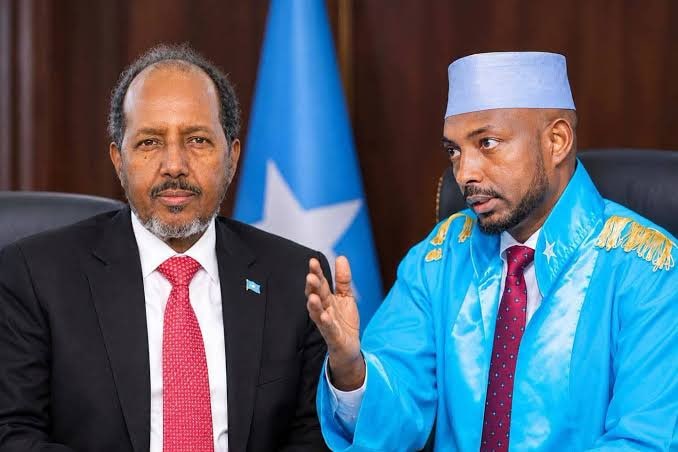
The dismissal of Somalia’s Supreme Court Chief Justice by President Hassan Sheikh Mohamud has triggered accusations of unconstitutional interference. But the controversy conceals a deeper truth: both the appointment and dismissal of chief justices have long been undermined by the failure to respect the 2012 Provisional Federal Constitution.
Article 90(j) requires presidential judicial appointments to follow the recommendations of the Judicial Service Commission. In other words, the president’s role is constitutionally constrained and largely formal; it does not grant him independent authority to appoint judges at will.
Article 109A establishes the commission and assigns it responsibility for judicial appointments and discipline. Article 111A further guarantees its independence and provides for its involvement in judicial dismissals.
The Constitution was remarkably clear about the urgency. Article 135(2)(a) required Parliament to establish the Judicial Service Commission within 30 days of the formation of the Council of Ministers.
Fourteen years later, Somalia has still failed to maintain the independent judicial appointment system envisioned by its Constitution.
Three administrations share responsibility: Hassan Sheikh Mohamud’s first presidency, Mohamed Abdullahi Farmaajo’s government and Hassan Sheikh Mohamud’s current administration. Successive parliaments have also failed to fulfil their constitutional responsibilities.
Although legislation establishing the commission was adopted in 2014, successive governments continued to exercise presidential control over judicial appointments and removals, bypassing the constitutional safeguards designed to protect judicial independence.
Now, the opposition condemns the president’s dismissal of the chief justice as unconstitutional. But a fundamental question remains: If dismissal without constitutional safeguards is unlawful, how can an earlier appointment made without those same safeguards be considered lawful?
Neither the president nor his political opponents can credibly defend selective obedience to the Constitution. The legality of any particular appointment or dismissal must ultimately be determined under the Constitution and applicable laws.
Somalia’s problem is not merely one president or one chief justice. It is a political establishment that has treated constitutional institutions as optional for more than a decade.
Judicial independence cannot exist when judges depend on presidential discretion for their appointments, careers and removal.
Until Somalia establishes a genuinely independent and functioning Judicial Service Commission, every appointment risks becoming a political favour and every dismissal a political punishment.
A country in which the Constitution is invoked only when politically convenient is not governed by the rule of law. It is governed by the will of those who hold power.
That is how Somalia has become an “Ila Meerayso” state — a country with the constitutional character of the Wild West, where political power replaces the authority of law.
Share this story