Former President Barack Obama once said, “Democracy is messy.”
He was right. Democracy is imperfect, unpredictable and sometimes frustrating. It can bring to power leaders who challenge its very foundations. Yet its enduring strength lies in a simple principle: no leader owns the country, and no political mandate lasts forever.
On November 3, 2026, Americans demonstrated why that principle matters.
In 2020, Donald Trump refused to accept his electoral defeat, culminating in the assault on the Capitol on January 6, 2021. Yet four years later, American voters returned him to the White House, alongside Republican control of Congress.
They had been promised lower prices, economic prosperity and an America First agenda. Instead, Trump’s sweeping tariffs, war with Iran, aggressive immigration policies and challenges to institutional independence became defining features of his presidency.
America First increasingly appeared to mean Trump First.
Then came November 3.
The midterm elections delivered a political earthquake. Democrats captured both chambers of Congress, overturning Republican majorities and winning in states long considered conservative strongholds.
James Talarico ended more than three decades of Republican statewide dominance in Texas. Abdul El-Sayed became the first Muslim elected to the U.S. Senate, while Jon Ossoff secured another victory in Georgia.
But the significance of these elections extended far beyond Democratic victories.
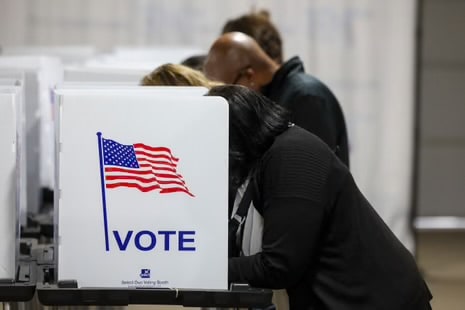
Americans demonstrated that democracy gives ordinary citizens the extraordinary ability to challenge those in power and change their country’s political direction.
This is what makes elections meaningful. Their purpose is not merely to select leaders every few years, but to ensure that citizens remain free to choose whom they trust to govern and to reject those who disappoint them.
Even Article 1 of Somalia’s 2012 Provisional Federal Constitution recognises this fundamental principle, declaring that, after Allah Almighty, all power is vested in the people.
An election without genuine freedom of choice is little more than a political ceremony. Its democratic value lies in the ability of citizens to bring about change when they believe it is necessary.
That was the deeper message of November 3.
Democracy can produce disappointing outcomes. But it also provides the peaceful means to correct them. Neither the presidency nor Congress is the permanent possession of any individual or party.
The Democrats should not confuse their victory with an unlimited mandate. They, too, must confront America’s economic anxieties, defend constitutional institutions and earn the confidence of those who voted for change.
America’s greatness has never rested solely on its military strength, economic wealth or global influence. It has also rested on the rule of law, independent institutions and the principle that those who govern must remain accountable to those they serve.
The November elections did not remove Trump from the White House. But they changed the balance of power in Washington and reminded him that presidential authority has constitutional limits.
Obama was right. Democracy is messy.
But its greatest beauty is that citizens can peacefully change the course of their nation without seeking permission from those who govern them.
A new America was not born simply because Democrats defeated Republicans.
It was born because Americans reminded the world that, in a democracy, the people always have the final word.
Asad Ali
Opinion Contributor
The views expressed in this article are those of the author and do not necessarily reflect the editorial position of the publication.
Share this story