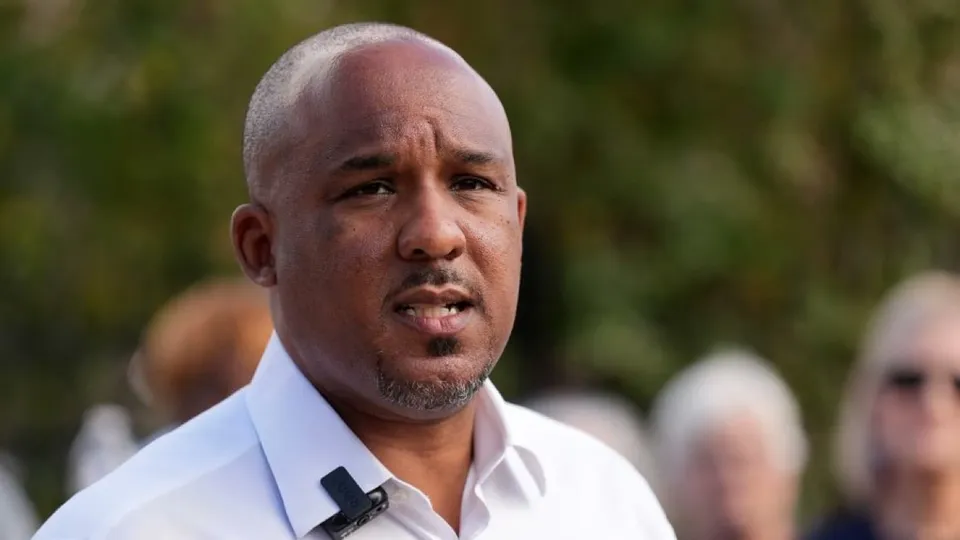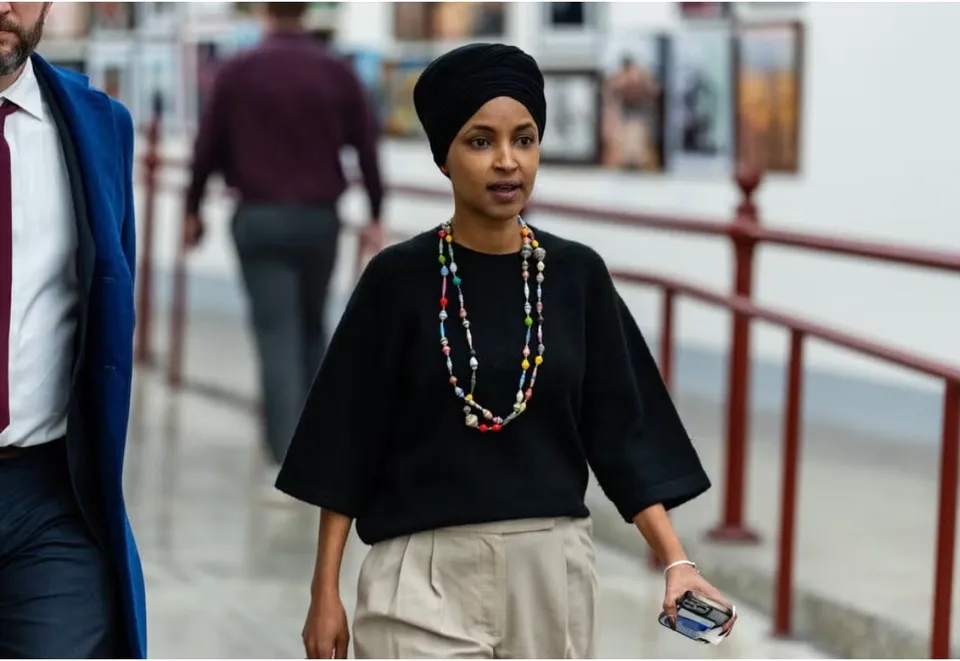
Federal prosecutors spent months seeking information against Representative Ilhan Omar from a man who briefly served as her personal bodyguard while pursuing a criminal case against him over answers he gave during an immigration interview, The New York Times reported Wednesday.
Abdullahi Mohamed’s lawyer, Bruce Rivers, told the newspaper that investigators offered to help his client avoid deportation if he supplied damaging information about the Minnesota Democrat. Rivers said Mohamed had no incriminating evidence to provide.
The Justice Department dropped the charge against Mohamed in September. In a statement to the Times, the department said his case was “completely unrelated to any current investigations” and declined to answer detailed questions.
The report describes investigators examining Omar’s financial dealings alongside her family’s immigration history. Part of the broader inquiry concerns allegations that a 2009 marriage was arranged to secure immigration benefits for a man suspected of being her brother. Omar has repeatedly denied those allegations.
The investigation became public last month when federal agents searched her Washington home and several people close to her were summoned to testify before a grand jury.
Omar, who won a fifth congressional term last week, has denied wrongdoing and described the investigation as political persecution by President Donald Trump.
An immigration interview leads to prosecution
Mohamed, who holds Somali and British citizenship, attended an interview in October 2025 as part of his application for permanent residency after marrying an American citizen in Minnesota.
According to Rivers, an immigration official asked whether Mohamed had worked for the Somali government while in the United States and whether he had interacted with American government officials or politicians.
Mohamed answered no to both questions, despite having provided security for Omar during a visit to Puntland, in northeastern Somalia, and having visited her congressional office.
Rivers said his client’s limited English prevented him from understanding the questions.
Mohamed’s residency application was denied. In February, he received a letter notifying him that he was under criminal investigation for allegedly lying under oath to a government official, an offense carrying a potential five-year prison sentence.
Former prosecutors and immigration lawyers interviewed by the Times described the prosecution as unusual. Immigration authorities can reject applications over suspected false statements, they said, but such cases rarely result in criminal charges.
Questions about Omar and a $10,000 payment
In March, prosecutors in Minneapolis invited Mohamed and Rivers to a meeting to discuss information he could provide and the possibility of cooperating with investigators.
Rivers said most of the questioning concerned Omar’s immigration history, marriages and financial affairs.
Investigators also asked about a $10,000 payment allegedly involving Omar and one of Mohamed’s brothers. According to Rivers, investigators suggested the transaction might have been a bribe.
The Times reported that court documents did not explain the government’s theory about the payment. Officials declined to answer questions about it.
Mohamed subsequently asked his brother about the money and told prosecutors that his brother described it as repayment of a loan, Rivers said. The report did not establish that the transaction involved wrongdoing.
Rivers said Mohamed tried to answer investigators’ questions but knew little about Omar’s private life. His brief security assignment, the lawyer said, did not mean they had a close relationship.
The lawyer also alleged that a prosecutor at the meeting repeatedly said the investigation was being directed by the White House. The report did not independently establish that account.
Omar’s office condemns alleged pressure
Jackie Rogers, a spokeswoman for Omar, told the Times that the congresswoman had never directly employed Mohamed.
She condemned the alleged offer of immigration assistance in exchange for damaging information, describing it as an abuse of presidential authority aimed at intimidating political opponents.
Rogers declined to answer questions about Omar’s relationship with Mohamed or whether the congresswoman was involved in the transaction concerning his brother.
Trump and senior administration officials have publicly expressed interest in investigating Omar.
At a White House event in March, Trump said he hoped she would be investigated. Later that month, Vice President JD Vance said he had discussed allegations of immigration fraud involving Omar with senior White House aide Stephen Miller.
Grand jury testimony and dismissal
Prosecutors secured an indictment against Mohamed in early April, and his trial was scheduled for October 26.
On September 3, however, Mohamed testified before a federal grand jury in Washington examining evidence concerning Omar, Rivers said. According to the lawyer, prosecutors granted him immunity covering potentially incriminating testimony.
Rivers said Mohamed repeated his explanation of the payment and maintained that he had no substantive knowledge of Omar’s marriages or immigration history.
The following day, prosecutors asked the court to dismiss his indictment.
Their stated reason was that Mohamed had been placed in deportation proceedings in August and that continuing the prosecution no longer served a federal interest given his anticipated removal.
Ryan Wood, a former federal prosecutor and immigration judge in Minnesota, told the Times that bringing such a case over answers in a residency interview was exceptionally unusual.
He questioned how prosecutors could establish deliberate deception given the reported language difficulties and the wording of the questions.
Wood and other former prosecutors also said promises of immigration assistance could undermine a cooperating witness’s credibility by giving the defense grounds to question the witness’s motives.
Mohamed left the United States shortly after the charge was dismissed, leaving his wife behind, according to Rivers.
When contacted by the Times in Nairobi, he declined to discuss the case, saying he would speak when he considered the time appropriate.
Share this story