MOGADISHU, Somalia (GO WORLD) — The Gulf Cooperation Council (GCC) has strongly condemned statements against the United Arab Emirates by officials of Somalia's term-ended federal government, turning a bilateral row into a regional diplomatic confrontation.
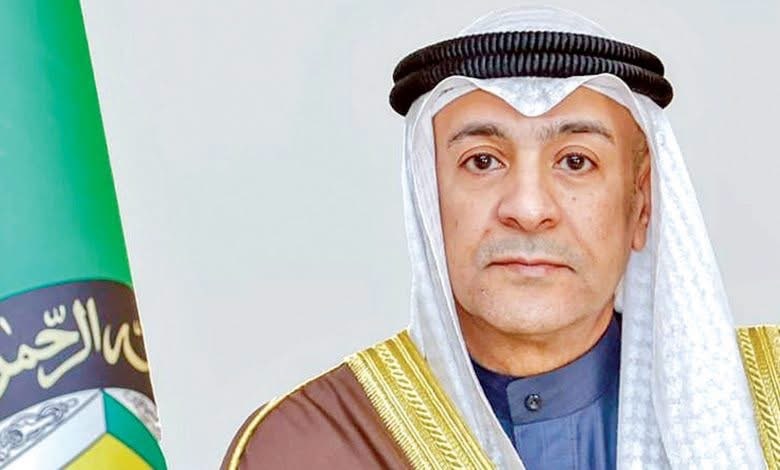
In a statement issued Thursday, GCC Secretary-General Jasem Mohamed Albudaiwi denounced what he called irresponsible statements and misleading media campaigns directed at the UAE. He rejected the allegations circulated by Somali officials and credited the Emirates with an important role in regional security, international stability and diplomatic dialogue.
Albudaiwi said the six-member bloc would not accept campaigns targeting any of its member states. The statement signals that Abu Dhabi has the backing of its Gulf neighbours as its relations with Mogadishu deteriorate.
The GCC statement did not name President Hassan Sheikh Mohamud individually. It was directed at officials of the federal government.
Abu Dhabi: Somalia's internal rivalries spilling into foreign policy
The GCC statement came after a sharply worded response from the UAE Ministry of Foreign Affairs. The ministry accused Somalia's federal authorities of a hostile, escalatory approach that threatens long-standing ties between the two countries.
Abu Dhabi said Somalia's internal political disputes were being carried into bilateral relations, to the cost of both peoples. It noted that it had already closed its embassy in Mogadishu and withdrawn its diplomats in January 2026. That followed Somalia's cancellation of bilateral agreements on security, defence and port cooperation.
The ministry nonetheless reaffirmed the UAE's commitment to the Somali people, including Somalis living in and visiting the Emirates.
The criticism sharpened when Anwar Gargash, diplomatic adviser to UAE President Sheikh Mohamed bin Zayed Al Nahyan, posted on X on Wednesday. He referred to Hassan Sheikh as Somalia's outgoing president and asked whether the confrontation served the national interest or domestic political calculations. Gargash warned that pulling Somalia's power struggle into regional disputes could undermine its stability and economy. It was an unusually direct rebuke of a sitting Somali head of state by a senior Emirati official.
Mogadishu expels the UAE ambassador
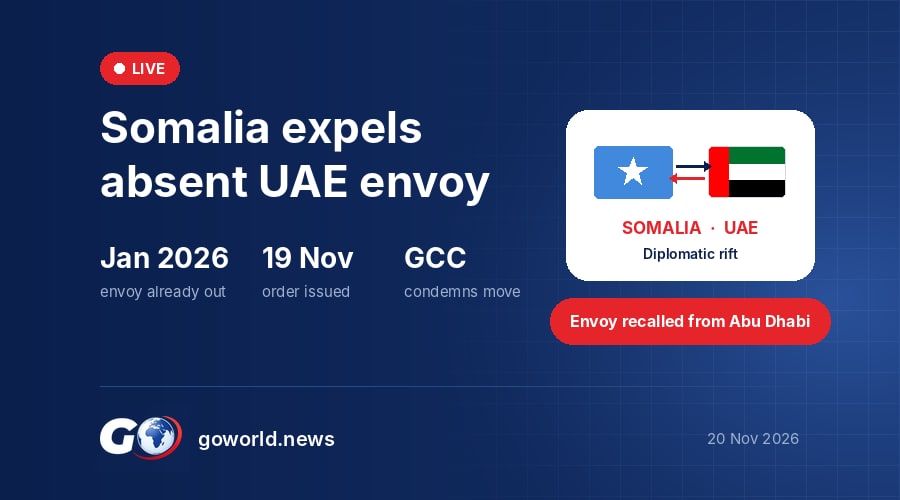
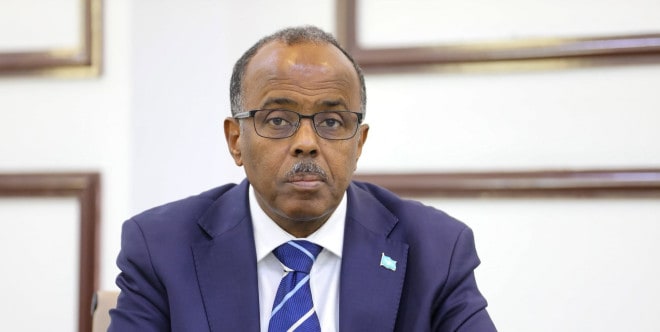
The standoff escalated on Thursday when the federal government ordered the UAE ambassador to leave Mogadishu within 72 hours and recalled Somalia's ambassador from Abu Dhabi. Information Minister Abdifatah Kasim Mohamud accused the Emirates of violating Somalia's sovereignty and described its activities as an invasion.
However, a source told GO WORLD that the UAE ambassador has not been in Mogadishu since January, when the Emirates closed its embassy and withdrew its diplomatic staff. The source described the expulsion order as a political move and said it took many diplomats by surprise.
The move followed a televised address by Hassan Sheikh on Tuesday. He accused Abu Dhabi of backing regional administrations against the federal government, setting up unauthorised military facilities and pursuing deals over the ports of Berbera, Bosaso and Kismayo without Mogadishu's consent. The UAE has rejected the allegations of interference.
Puntland, Somaliland and Jubaland have previously rejected Mogadishu's attempts to cancel agreements covering their territories. The dispute exposes a long-running disagreement over how powers are divided between the federal government and the regions.
A war of words on social media
The confrontation has spilled onto social media, where Somali and Emirati officials and commentators have traded increasingly personal accusations.
Defence Minister Ahmed Moalim Fiqi disputed Gargash's comments on the president's mandate and accused the UAE of fuelling political divisions. State Minister for Foreign Affairs Ali Balcad and Public Works Minister Ayub Ismail Yusuf also criticised Abu Dhabi, particularly its ties with Puntland, Somaliland and Jubaland.
Emirati commentator Abdulkhaleq Abdulla responded by pointing to the UAE's financial and military support for Somalia, including for its security forces. His further claims of payments to Somali officials have not been independently verified.
The exchanges have drawn online criticism of Hassan Sheikh and his ministers, though the scale of public opposition cannot be reliably judged from social media alone.
A mandate crisis at home
The row comes as Hassan Sheikh faces a constitutional dispute over his own mandate. Somalia's Supreme Court ruled earlier this month that his term had expired and ordered elections within 90 days. The federal administration argues that constitutional amendments allow presidential and parliamentary terms to be extended, a position the opposition rejects.
That dispute raises questions about the government's authority as it takes on a major Gulf partner with large economic and security interests in Somalia.
The GCC's involvement marks a significant escalation. Criticism of Mogadishu now comes not only from the UAE but from the leadership of a bloc that also includes Saudi Arabia, Qatar, Kuwait, Bahrain and Oman. The widening rift could strain Somalia's ties across the Gulf at a time of political division, security challenges and heavy reliance on international partners.
Neither the GCC nor the UAE has announced economic sanctions against Somalia.
Source: Garowe Online, with reporting from the GCC Secretariat, the UAE Ministry of Foreign Affairs.
goworld.news — a Garowe Online Media Group publication
Share this story