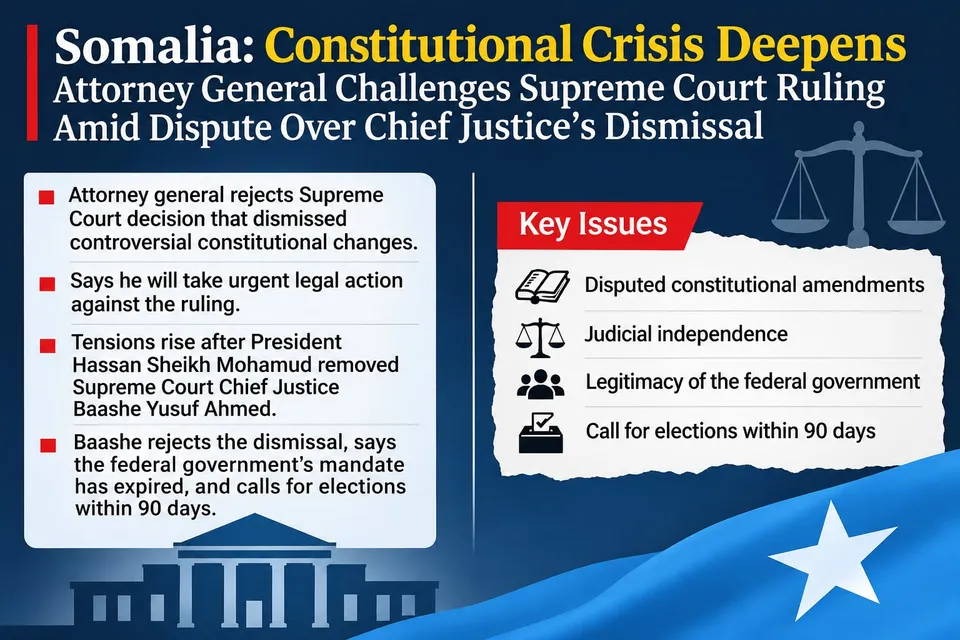
MOGADISHU, Somalia — A deepening constitutional dispute in Somalia has taken a new turn after the federal attorney general challenged a reported Supreme Court decision rejecting controversial constitutional changes, intensifying a confrontation over judicial independence and the legitimacy of the country's political leadership.
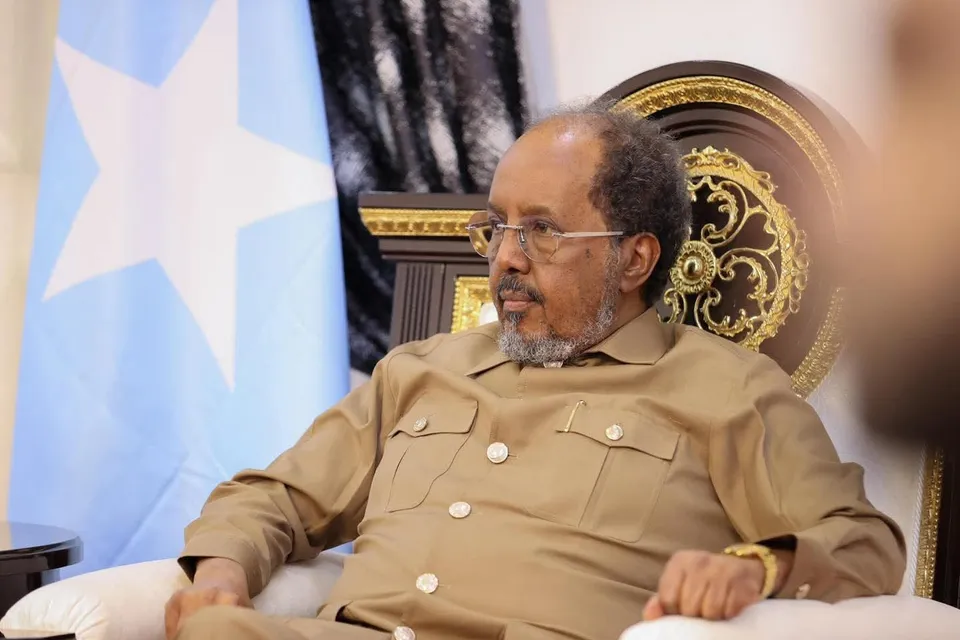
The attorney general said he would pursue urgent legal action against the court's decision, according to reports of his statement, as tensions continued following the removal of Supreme Court Chief Justice Baashe Yusuf Ahmed by President Hassan Sheikh Mohamud.
The dispute escalated after Baashe rejected his dismissal and issued a statement Thursday declaring that the federal government's constitutional mandate had expired. He also called for national elections to be held within 90 days.
The former chief justice's position represents a direct challenge to the president's authority and raises questions about whether the executive branch can remove the country's highest-ranking judicial official amid an unresolved constitutional dispute.
Reports that Baashe had sought protection from opposition figures in Mogadishu have added a political dimension to the confrontation, although the circumstances of those reports remain unclear.
At the centre of the crisis are competing interpretations of Somalia's constitutional framework, particularly amendments promoted by the federal leadership that have faced opposition from political figures and some federal member states.
The attorney general's intervention further complicates the dispute, placing the executive and judicial institutions on opposing sides of a constitutional argument with potentially significant consequences for Somalia's political stability.
The confrontation also raises broader questions about the separation of powers, the independence of the judiciary and the legal mechanisms available to resolve disputes over constitutional authority.
With neither side showing signs of retreat, the controversy threatens to deepen divisions between the federal leadership and its political opponents at a sensitive moment for Somalia's governance and electoral future.
The November 5 ruling was issued by a five-judge panel, which found that the constitutional amendments could not extend the terms of officials already in office. The court set a 30-day deadline for political leaders to agree on an electoral framework and called for elections within 90 days.
The presidency, meanwhile, has defended the leadership change as part of efforts to improve judicial efficiency and transparency.
The latest confrontation leaves Somalia facing two competing assertions of constitutional authority, with the implementation of the court's ruling and the future leadership of the judiciary unresolved.
Share this story