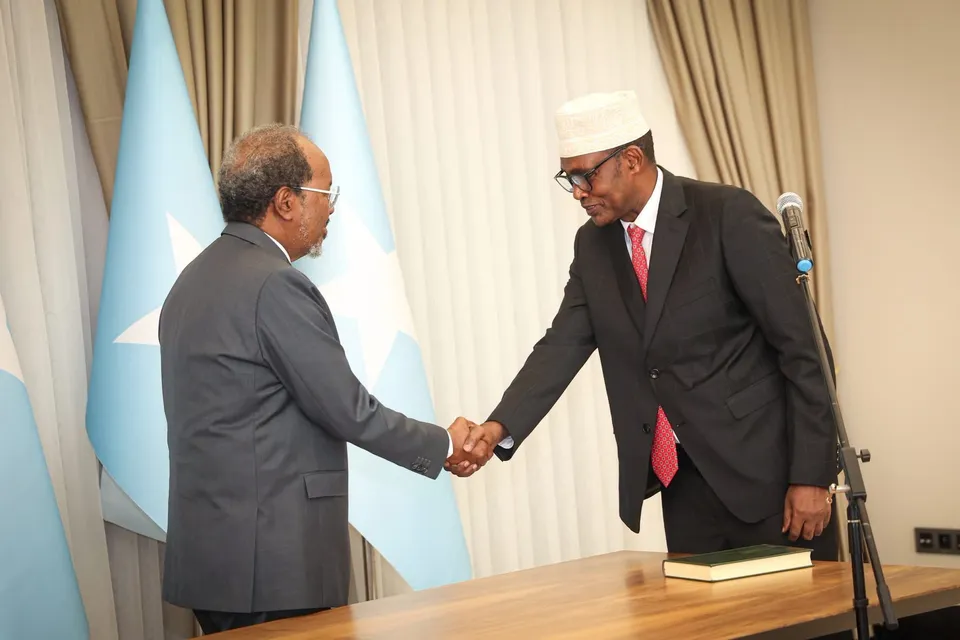
MOGADISHU, Nov. 7, 2026 — Somalia’s former President Hassan Sheikh Mohamud has overseen the swearing-in of Ibrahim Idle Suleiman as the new Chief Justice of the Supreme Court, days after removing his predecessor, Bashe Yusuf Ahmed, following a dispute over judicial authority.
The ceremony, attended by former parliamentary leaders and senior officials of the previous federal administration, comes amid a widening constitutional dispute over the legitimacy of the appointment and the independence of Somalia’s judiciary.
On November 5, Supreme Court judges reportedly rejected Bashe Yusuf Ahmed’s dismissal, arguing that it violated constitutional procedures. They also challenged the continued mandates of the former president and parliament.
The former federal Attorney General’s Office rejected the judges’ decision, questioning its legal validity.
What Does the 2012 Constitution Say?
Under Article 90(j) of Somalia’s 2012 Provisional Constitution, the president appoints senior federal judges on the recommendation of the Judicial Service Commission.
Article 106 guarantees judicial independence, while Articles 109A and 111A establish the constitutional framework governing judicial institutions and appointments.
The central legal question is whether the removal of the former Chief Justice and the appointment of his successor followed the constitutionally required procedures.
Article 91 also establishes a four-year presidential term, adding another dimension to the dispute over the former administration’s constitutional mandate.
The swearing-in ceremony alone does not resolve these legal questions. Without evidence that the required appointment and dismissal procedures were followed, the legitimacy of the transition remains contested.
The dispute raises broader concerns about judicial independence, constitutional authority and the rule of law in Somalia.
Share this story