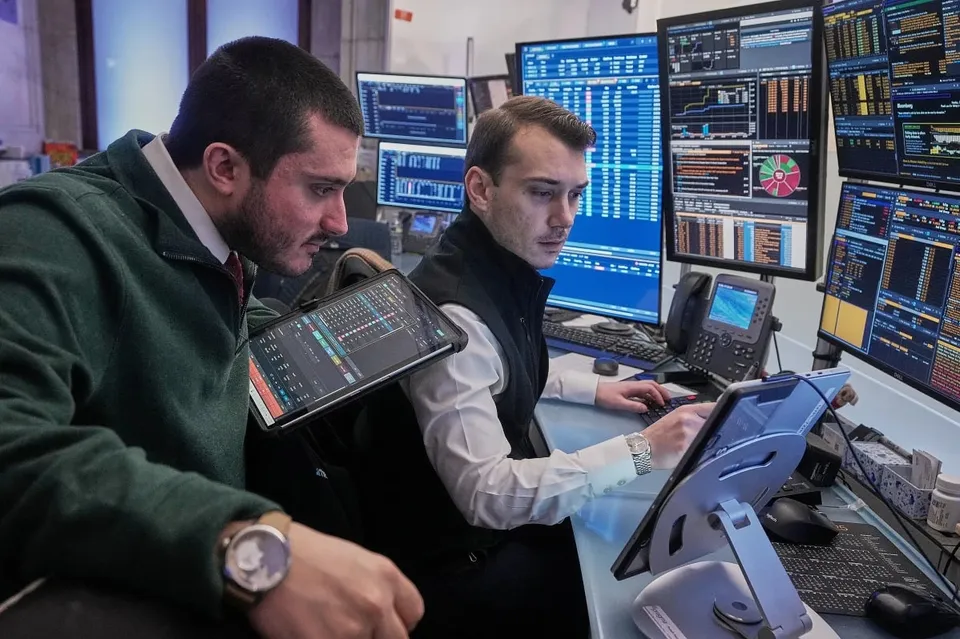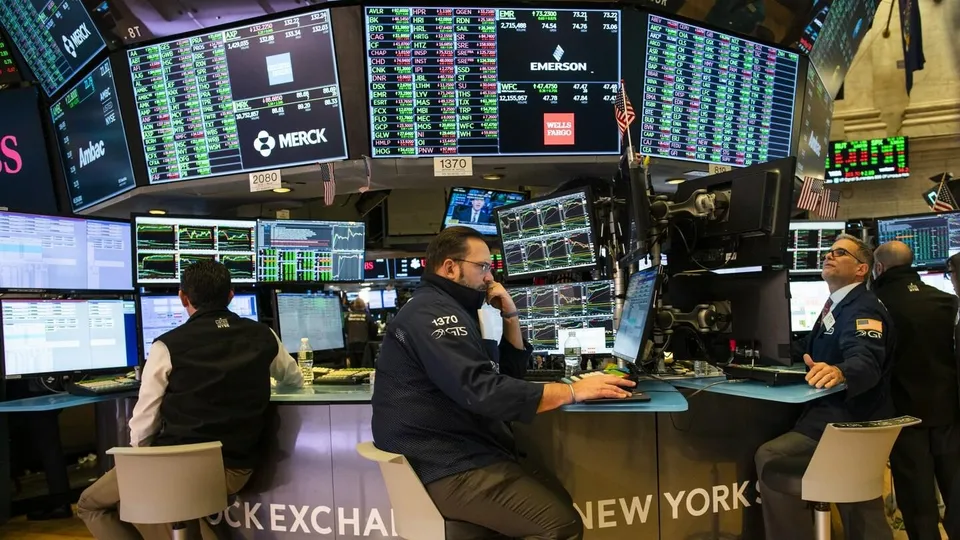
NEW YORK — Global financial markets ended a turbulent week as a sharp sell-off in technology stocks, uncertainty over artificial intelligence investments and renewed geopolitical tensions unsettled investors across the United States, Europe and Asia.
Wall Street recovered some ground on Friday following heavy losses earlier in the week, but the rebound failed to restore confidence after billions of dollars were wiped from the value of major technology companies.
The Nasdaq Composite, which includes many of America’s largest technology companies, rose approximately 1.1 percent on Friday, while the S&P 500 gained 0.3 percent. The Dow Jones Industrial Average declined around 0.5 percent.
Despite Friday’s recovery, all three major U.S. indexes recorded weekly losses, reflecting growing concerns about the sustainability of the artificial intelligence investment boom.
Artificial Intelligence Boom Faces Growing Scrutiny
For several years, artificial intelligence has been one of the strongest drivers of global stock market growth. Technology companies have invested heavily in advanced computer chips, data centres and the infrastructure needed to develop increasingly sophisticated AI systems.
But investors are now questioning whether the enormous spending will generate sufficient returns.
The concerns triggered a sharp decline in technology shares during Thursday’s trading session, when the Nasdaq fell more than five percent.
Although some semiconductor and technology stocks recovered on Friday, the market remains sensitive to corporate earnings, borrowing costs and expectations about future demand for AI products.
Analysts say the latest volatility reflects a broader reassessment of the prices investors are willing to pay for companies associated with artificial intelligence.
Asian and European Markets Under Pressure
The sell-off extended beyond Wall Street, affecting major financial centres in Asia and Europe.
Japan’s Nikkei index suffered substantial losses on Friday, while South Korean technology companies faced selling pressure amid concerns about the global semiconductor industry.
European stock markets also declined as investors reacted to developments in the United States and uncertainty over global economic growth.
The widespread losses demonstrated how closely international financial markets have become connected, particularly through technology investment and cross-border capital flows.
Oil and Gold Reflect Global Uncertainty
Energy and commodity markets presented a different picture.
Oil prices remained sensitive to geopolitical developments in the Middle East, particularly tensions involving Iran and the potential consequences for regional energy supplies.
Brent crude traded close to $100 a barrel during the week, keeping attention focused on the possibility of higher transportation and production costs.
Gold, traditionally viewed as a safe-haven investment during periods of uncertainty, remained above $4,000 an ounce.
Movements in both commodities reflected investor concerns about inflation, international security and the future direction of interest rates.
What It Means for Somalia and East Africa
Although Somalia does not have a large formal stock market, developments in international financial markets can affect its economy through trade, commodity prices and currency movements.
Somalia relies heavily on imported fuel, food, medicines, construction materials and other essential goods.
Higher international oil prices can increase transportation and electricity costs, potentially placing additional pressure on businesses and households.
Changes in the value of the U.S. dollar may also influence regional trade, particularly with Kenya and other East African economies.
For Somali importers, shipping companies and traders, the most immediate indicators to monitor are international fuel prices, currency movements and the cost of transporting goods.
However, the recent market turmoil does not necessarily mean that consumer prices in Somalia will rise immediately. Domestic supply conditions, competition and exchange rates will also influence the impact.
Investors Look Ahead to Inflation and Interest Rates
Financial markets will now turn their attention to upcoming U.S. economic figures and the Federal Reserve’s next monetary policy decisions.
Investors are particularly concerned about whether inflation will remain high enough to keep borrowing costs elevated.
Higher interest rates can discourage investment, increase financing costs and reduce the appeal of shares in rapidly growing technology companies.
Geopolitical developments, particularly in the Middle East, will also remain important for oil markets and global investor confidence.
Friday’s partial recovery offered some reassurance after a difficult week, but it did not resolve the deeper questions surrounding artificial intelligence investment, global economic growth and political uncertainty.
For the coming week, the direction of technology shares, energy prices and the U.S. dollar will provide important signals about whether markets are stabilising or preparing for further volatility.
GO WORLD Business Desk
International Business, Financial Markets and the Global Economy
Share this story